Insurance-decision hub
Roof Damage Insurance Claims: Understand the Money Before You File
For homeowners comparing repair estimates, deductibles, policy terms and storm-damage documentation before deciding how to proceed.
No contractor assignment is implied. Use the assessment to organize the situation before comparing repair or claim options.
Bottom-funnel guides in this cluster
These dedicated guides cover the highest-intent decisions in this cluster. Each page links back to the assessment and to related repair, cost or insurance guides.
Should you file a roof insurance claim?
Start by documenting the event and estimating the repair scope. Then compare that information with the deductible and policy language. Coverage decisions belong to the insurer under the policy, not to a roofing website, contractor or conveniently confident stranger on social media.
What are ACV and RCV in roof claims?
How those concepts apply to a specific roof claim depends on the policy and state rules. Future claim pages will explain the terminology and direct readers to insurer and Texas Department of Insurance resources instead of presenting legal conclusions.
- National Weather Service
- FEMA
- Insurance Institute for Business & Home Safety
- Texas Department of Insurance
Future money pages should cite the source relevant to the exact claim rather than copying generic statistics across locations.
Frequently asked questions
What should I do first about Roof Damage Insurance Claims?
Start with safety, document what you can see from a safe location, limit additional damage when that can be done safely, and identify whether the situation needs urgent professional inspection before authorizing permanent work.
When does Roof Damage Insurance Claims become an emergency?
Treat the situation as urgent when water is actively entering, roofing materials are loose or falling, there is a large opening, structural movement is visible, electrical systems may be exposed, or weather could quickly worsen the damage.
Can Roof Damage Insurance Claims be evaluated from the ground?
Ground-level observations can reveal obvious problems, but they cannot rule out hidden damage. Flashing failures, lifted materials, deck damage and concealed moisture often require a qualified physical inspection.
What should I photograph or document?
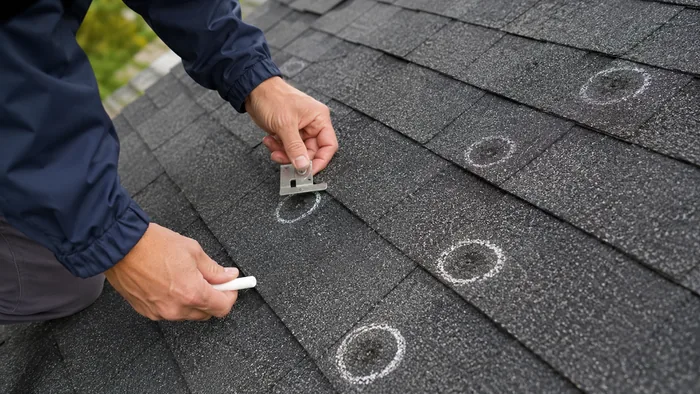
Save dated photos of visible exterior damage from safe locations, interior stains or leaks, affected belongings, temporary mitigation, contractor estimates, receipts and written insurance correspondence.
How do contractors determine the repair scope?
A useful scope normally considers the damaged component, affected area, roof material, access, slope, flashing, decking, ventilation, code-related items, tear-off requirements and any hidden damage found during inspection.
Does homeowners insurance always cover Roof Damage Insurance Claims?
No. Coverage depends on the cause of loss, exclusions, deductible, policy form, age or condition provisions and how the insurer evaluates the damage. The policy and claim facts control, not a generic online article.
Should I get more than one estimate?
Usually, yes when time and safety allow. Multiple written estimates make it easier to compare scope, materials, exclusions and pricing, but compare like-for-like work rather than only the bottom-line total.
What can increase the final cost?
Steep or high roofs, difficult access, specialty materials, matching problems, hidden deck damage, flashing work, code requirements, emergency scheduling and a larger affected area can all increase the final scope and price.
Can hidden damage change an estimate after work begins?
Yes. Moisture-damaged decking, concealed flashing failures or structural issues may only become visible after materials are removed. Ask how change orders and newly discovered damage will be documented and priced.
Should I make temporary repairs before an inspection?
Reasonable temporary protection can be appropriate when it safely prevents additional loss. Avoid unsafe roof access, keep receipts and photographs, and do not destroy evidence that may be relevant to a contractor or insurance inspection.
What should I ask a roofing contractor before signing?
Ask for the written scope, materials, warranty terms, payment schedule, change-order process, proof of insurance, cleanup responsibilities, permit assumptions and a clear explanation of what is excluded from the quote.
How can RoofDamageCalculator.com help with Roof Damage Insurance Claims?
The assessment can help organize the damage type, urgency, likely scope and insurance considerations before you compare estimates or speak with a contractor. It is a planning tool, not a substitute for an on-site inspection.
Turn the damage into a structured decision
Record the damage type, urgency, likely repair scope and insurance considerations before comparing recommendations.
Start the Free Roof Damage Assessment